

Physical Gold vs Digital Gold: Which Investment Option Is Right for You?
Gold has long been considered a safe haven in times of economic uncertainty. But today’s investors have more ways than ever to gain exposure to this timeless asset—most notably through physical gold and digital gold. Each offers its own unique benefits and considerations, depending on your financial goals, investment style, and risk tolerance.
At FMT Global Resources, we work with clients who prefer both approaches. Whether you’re interested in taking possession of physical assets or exploring the convenience of digital options, it’s important to understand how they differ—and how they might fit into your investment strategy.
What Is Physical Gold?
Physical gold refers to tangible assets like gold bars, coins, or bullion that you can buy, hold, and store. This traditional form of investment has been used for centuries to preserve wealth and diversify portfolios.
Pros:
Direct Ownership – You own a real, physical asset with no digital interface or third-party involvement.
Long-Term Security – Historically, gold holds its value during inflation and market downturns.
Universal Acceptance – Physical gold can be sold or traded globally, making it a highly liquid asset when needed.
No Tech Dependency – It doesn’t rely on apps, platforms, or digital access to manage.
Considerations:
Storage – You’ll need a safe place to keep it, whether that’s at home or in a secure vault.
Transport and Insurance – Depending on how and where you store it, there may be extra costs to consider.
Liquidity – Selling might take slightly longer than a digital transaction, though reliable dealers can streamline this.

What Is Digital Gold?
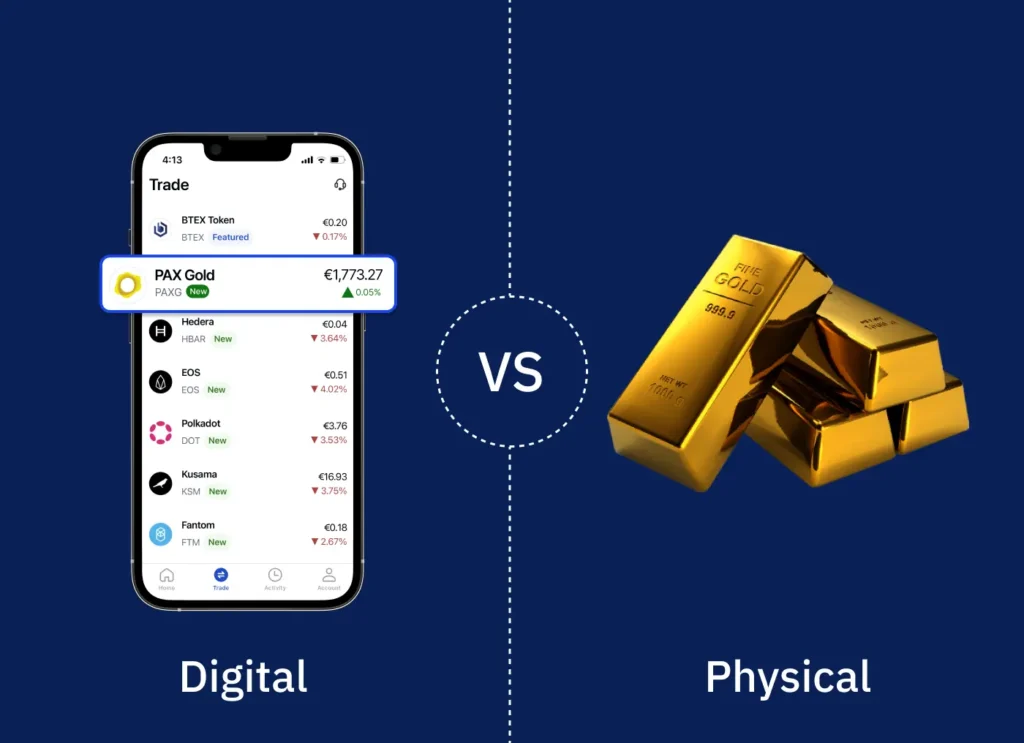
Digital gold allows you to invest in gold without physically holding it. You buy it online, and it’s typically stored in a vault by a third-party custodian. Some platforms even let you trade fractions of a gram, making it accessible to a wider range of investors.
Pros:
Ease of Access – Buy and sell with just a few clicks via apps or websites.
Fractional Investing – Start with small amounts, ideal for beginners or cautious investors.
No Physical Storage – No need for safes, vaults, or insurance.
Considerations:
Platform Risk – You rely on the digital platform or custodian to safeguard your investment.
Limited Control – You may not have immediate access to or ownership of the underlying physical asset.
Transparency – It’s important to research how the platform stores and manages the gold, and whether it’s fully backed.
Which One Is Right for You?
Choosing between physical and digital gold comes down to how you want to interact with your investment.
If you value tangible assets, privacy, and long-term wealth protection, physical gold may align more with your strategy.
If your focus is on ease, accessibility, and short-term flexibility, digital gold might be a better fit.
Some investors choose to blend both approaches—using digital gold for flexibility and physical gold for stability.
Final Thoughts
Gold remains one of the most reliable assets for wealth preservation, and today’s investors have more choice than ever in how they engage with it.
At FMT Global Resources, we provide secure, trusted access to physical gold for clients who value tangible assets. Whether you’re exploring gold for the first time or looking to expand your holdings, we’re here to help you make an informed decision.
Want to learn more about physical gold or how it compares to digital options?
Get in touch with our team—we’re happy to help.